Japan dropped from 42.68% to 40.34%, while Korea dropped to 32.79% from 33.88% in 1997.
China, by contrast, increased to 7.57% with an output of 2.8 million DWT. With Germany and Poland accounting for a further 6%, these five countries accounted for 86.7% of the total DWT delivered in 1998. While other countries such as Italy, Finland, and France do not figure significantly in DWT terms, they are involved in high value passenger ships, and remain important shipbuilding countries.
Tankers increased to 220 ships of 14.1 million DWT compared with 1997's figures of 142 ships at 8 million DWT. Similarly ships other than tankers rose from 844 ships of 28.3 million DWT to 860 ships, but the tonnage declined to 22.9 million DWT.
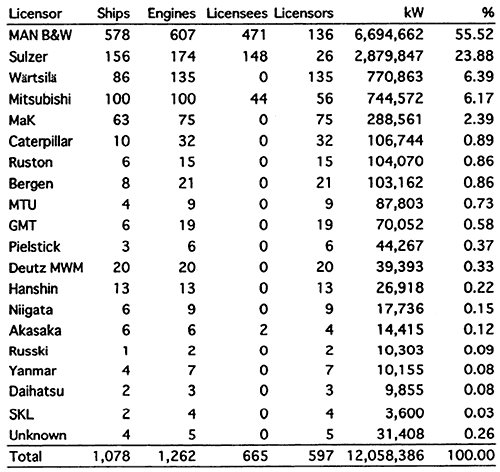
On the engine building side, as shown in tables 2.1-2~2.1-4, at the low-speed side MAN B&W increased from 5.4 million kW to 6.1 million kW to account for 64.54% of the installed propulsion power in new buildings delivered in 1998. Both of its competitors, Sulzer and Mitsubishi, saw a decline with Sulzer having six less engines than in 1997, while the output dropped from 2.8 million kW to 2.6 million kW. There was one more Mitsubishi engine in ships delivered in 1998 than in 1997 but, in rated output, the company showed a drop from 802,286 to 744,572kW. Total installed output of low-speed units was some 9.5 million kW compared with 9 million kW in 1997.