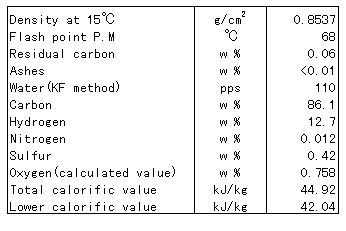
Table 2 Results of Fuel Analysis
The test engine is of the same particulars as those of the 6-cylinder engines which are the commercial engines for marine use, except the cylinder number.
3. Test Items
The test was carried out for the items described below, and the combination thereof.
(1) Change of the specification of fuel valve
(2) Change of the maximum pressure (fuel injection timing)
(3) Change of the compression ratio and the charged air pressure
(4) Shortening of the overlap period of inlet valve and exhaust valve
(5) Change of the closing timing of inlet valve
(6) Retarded fuel pump plunger (reduction in the maximum pressure under the partial load)
4. Test Results
The following results are obtained for the cases where the maximum pressure is regulated to be constant except the test for change of the maximum pressure.
In general, the NOx emission rate is the E3 value applicable to propeller law operated engines, and the engine performance is described by the value under the 100% load.
4.1 Change of Specification of Fuel Valve
Generation of NOx from the diesel engine is estimated to be attributable to generation of the local combustion field caused by the non-uniformity of the fuel distribution in the combustion chamber.
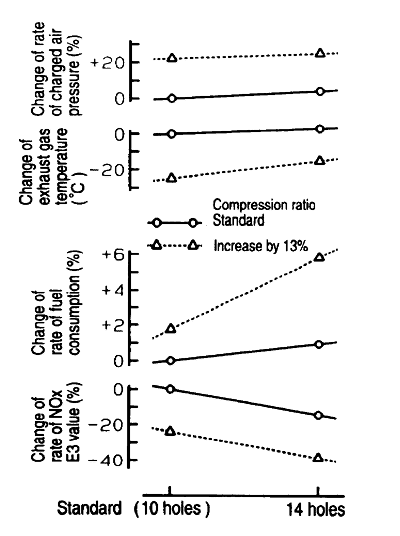
Fig. 1 Change of the Number of Injection Holes of Fuel Atomizer
Reduction of the NOx generation ratio was tried by increasing the number of injection holes of the fuel atomizer so that the non-uniform fuel distribution is changed to as uniform combustion field as possible, and the combustion is free from the locally high temperature part.
Tests were carried out with the standard fuel atomizer having 10 injection holes, with the fuel atomizer having 14 injection holes while the injection angle and the total area of the injection holes are same, and the fuel atomizer with the changed nozzle sac capacity.
When the number of injection holes is same, little difference was shown in NOx value by the size of the nozzle sac.
In the standard condition, NOx is reduced by 14% if the number of the injection holes is changed from 10 to 14 while the fuel consumption was degraded by 0.9%.
NOx was reduced by 16% when the fuel consumption was degraded by 1%.
The exhaust gas temperature was little changed.
In a case of the high compression ratio and high charged air pressure in which the compression ratio and the charged air pressure are increased, degradation of the fuel consumption to the reduction of NOx due to the change of the number of injection holes was larger than that in a standard condition.
The results when the number of injection holes are changed are shown in Fig. 1.
The tests mentioned below were carried out with the fuel atomizer where only the number of injection holes was changed to 14.
BACK CONTENTS NEXT


