Table 2 Fuel properties
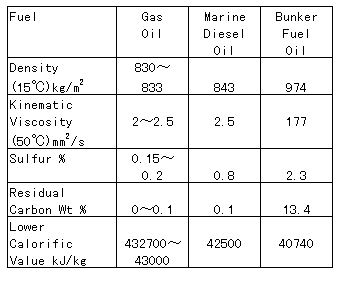
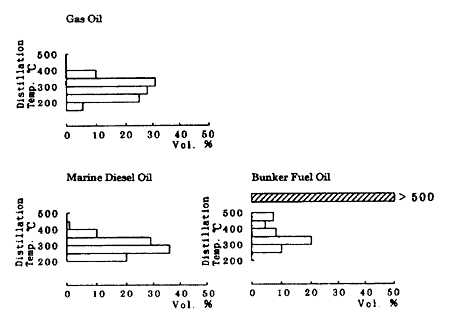
Fig. 1 Distribution of distillates in test fuels
In Figure 1 the distribution of the distillates of the three fuels is shown. It can be seen that there are few differences between GO and MDO, but BFO contains more than 50% residual parts (hatched bar).
2.3 Emission Measurement
NOx, CO and HC emission from the test engine is measured with the same apparatus as used for automobiles. The ppm unit is converted to g/kWh using the exhaust gas flow rate. Smoke density is measured in Bosch Smoke Units (BSU) using a Bosch smoke meter. According to the direct sampling method [3], particulate (PM) in the exhaust gas is obtained by measuring the filter weight change.
3. Experimental Results and Discussion
3.1 Emission Measurement
The results of test runs according to generator and marine characteristics are shown in Figure 2. Comparing the results when using BFO and GO, the following is clarified.
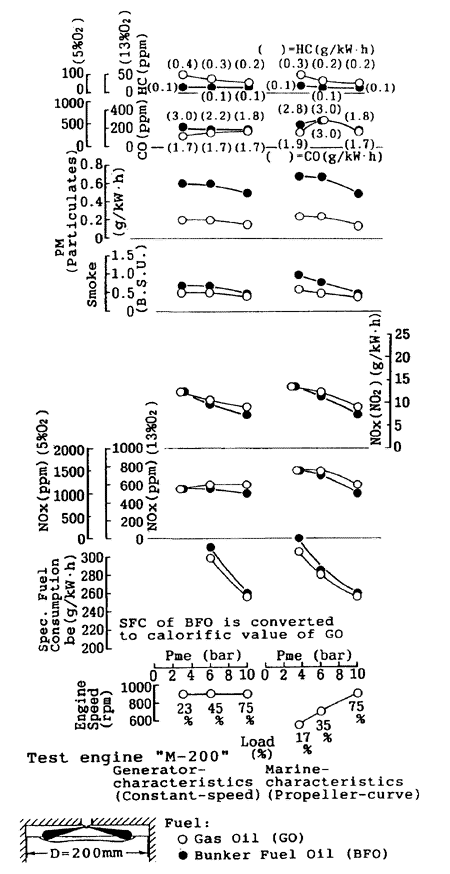
Fig. 2 Results of emission measurement (test engine)
1. A higher emission of NOx, CO or HC is not measured when using BFO.
2. The greatest difference between the fuels is the three times higher PM when using BFO. This trend is more pronounced at low load than at high load.
3. The smoke density, expressed in BSU, is higher when using BFO, but the difference between the two fuels is much smaller compared with the PM measurement. While PM is composed of dry soot and SOF (soluble organic fraction), smoke density (BSU) represents dry soot only. Therefore, from item 2 and 3, it can be concluded that mainly SOF emission increases when using BFO.
BACK CONTENTS NEXT


