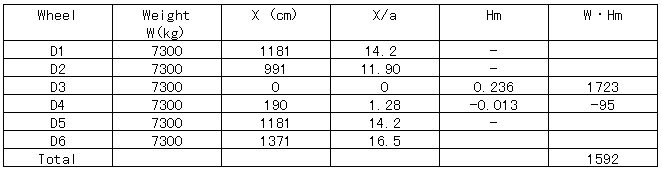
Mγ = 71.4 cm x 1738 kg = 124093 kg-cm
σγ = Mγ/Z = 124093/313 = 396kg/c?u
speed impact coefficient i = 1 + 0.01V = 1.75 (Vmax = 75 km/h)
396 x 1.75 =694 kg/c?u
3-3 β = 16.4 a = 83.3cm
Mγ = 83.3 cm x 1592 kg = 132597 kg-cm
σγ = Mγ/Z= 135612 / 313 = 424 kg/c?u
speed impact coefficient i = 1 + 0.01 V = 1.75 (Vmax = 75 km/h)
424 x 1.75 =741 kg/c?u
4. Conclusion
When a given rolling stock is planned to run on a given line section in JR, rail stress, sleeper stress, ballast pressure and roadbed pressure are calculated and if they are within the allowable values, permission for running is granted.
If the allowable values are exceeded, track needs to be strenghened or train speed needs to be reduced. There is generally a considerable allowance for sleeper stress and ballast pressure in JR, so permission of rolling stock on a Line is usually controlled according to rail bending stress and roadbed pressure only In the case of Bangalore ELRTS, almost all roadbed is concrete. Therefore roadbed pressure need not be examin4 and rail stress only should be examined.
Japanese Railways adopt the following allowable values for rail stress depending on the annual gross passing tonnage of a given line.