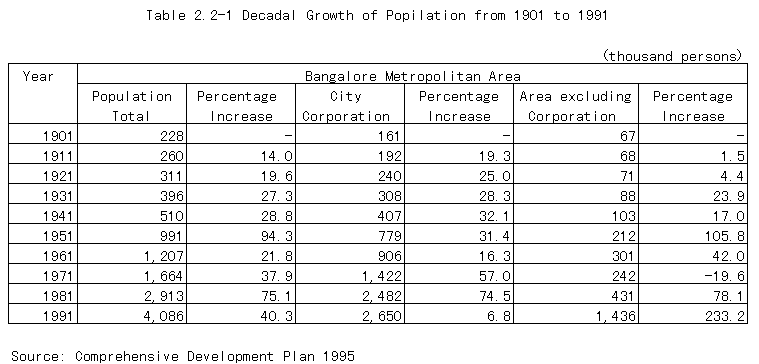
much as 37.7% of the total population of 2.9 million.
About 60% of the migrants came to Bangalore from different District of karanataka including the Bangalore District. The contribution of Bangalore District itself is 21%, majority coming from the rural area. People migrate to Bangalore for different reasons.
The most important cause of migration is complement, accounting for 30% of migrants.
2.2.4 Industries
Bangalore city was originally a market place in Kannada. In 18th century Bangalore was an important manufacturing and trade center for textiles of different types, silk and cotton. With the arrival of the British in the end of the 18th Century the manufacturing industry suffered a decline, although trade was promoted. No major industrial base was developed during 19th Century except a textile mill. The foundation for modern industrial and economic growth were laid with two major developments; the construction of Bangalore - madras Railway line and the generation of hydroelectric power.
Industrial development in Bangalore gained momentum from 1930. A number of industrial establishments producing chemicals, pharmaceutical, electronic and crockery came into Bangalore during the thirties. During the following decade, the large establishments of aircraft, rail coach and electric manufacturing were set up and created many employment. After the Indian's independence, the large central public sector