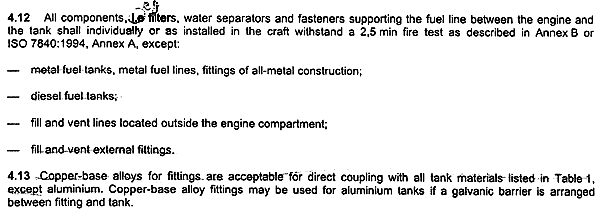
4.4 All materials used in fuel systems shall be resistant to deterioration by the fuel for which the system is designed and to other liquids or compounds with which the material may come in contact under as installed normal operating conditions, e.g. grease, lubricating oil, bilge solvents and sea water.
4.5 Metal pipes, welded to the tank, should be properly supported and braced to the tank so that bending moments are avoided at the connection of the pipe to the tank.
4.6 All valves and other components intended to be operated or observed during normal operation of the craft or for emergency purposes, shall be readily accessible.
All other components of the system shall be accessible. Tanks need not be accessible for removal.
4.7 Petrol tanks and all connections in a petrol fuel system shall be insulated from sources of ignition in accordance with ISO 8846, ISO 9094-1, ISO 9094-2, ISO 10133, ISO 11105, and ISO 13297.
4.8 There shall be no outlets for drawing fuel out from the system except:
- plugs in petrol filter bowls which are intended solely for the purpose of servicing the filter;
- plugs or valves in diesel filter bowls which are intended solely for the purpose of servicing the filter;
- drain valves and other fittings in diesel fuel tanks arranged as specified in 5.2.3.

Bonding wires shall not be clamped between a hose and its pipe or spud (spigot).
4.10 A means to determine fuel level or quantity in the tank shall be provided for each tank. If sounding pipes are provided they shall meet the requirements of 6.1 .6 and 6.1.8.
Sight gauges shall only be used in diesel tanks if fitted with automatic shut-off valves.
4.11 After installation, all fuel systems shall pass the pressure-test as described in Annex A.
4.14 Petrol engine compartments and petrol tank compartments shall have ventilation in accordance with ISO 11105.
4.15 Electrical components shall be installed in accordance with ISO 10133, ISO 10239 and ISO 13297.
4.16 Petrol filter/tanks shall not be installed directly above batteries.