Guidelines on the VTS subjects in which managers may
require either experience or training are given in Annex 3.
3.3 Career incentives
The formal recognition of VTS Operator Certificates
provides the foundation for a properly balanced and
self-evident career structure and the impetus to set and
strive for improved standards of performance.
The establishment of universally recognised
qualifications places the profession on a par with the
shipping and pilotage industry to whom it serves and owes
allegiance. The regular validation of those qualifications
seeks to engender improvement and quality standards
comparable to those of other professions. In combination
these attributes enable successful personnel to offer their
services for employment on a world-wide basis, subject to the
maintenance of their certificated levels of performance.
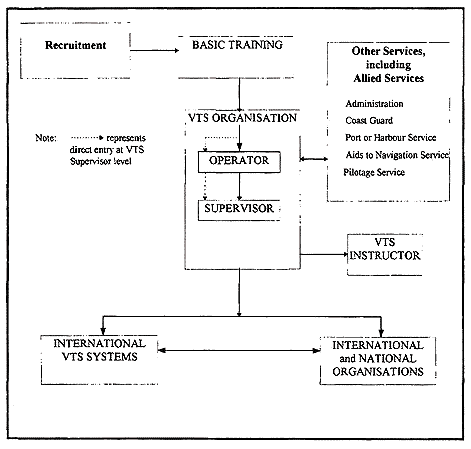
Additionally, the scope for career progression,
either in VTS or in a wider diversity of associated marine
activities offers a career structure which provides for
motivation and ambition, whilst making continued use of the
skills and experience gained. (see Fig.1).
3.4 Instructor
VTS Personnel who demonstrate a flair for training
should be encouraged to obtain experience in instructional
techniques, knowledge of training programmes and an
understanding of specific training objectives. This should
enable them to become instructors for basic or on-the-job
training. However, in order to maintain high levels of
training effectiveness, instructors must have an appropriate
balance of professional VTS knowledge and academic
qualifications.
Competent Authorities should ensure that instructors
are appropriately qualified and experienced for the
particular types and levels of training and corresponding
assessment of competence as described in Tables 1 and 2.