3.2.3 Field Test on the Waterway Siltation Preventation Effect of Submerged Dike
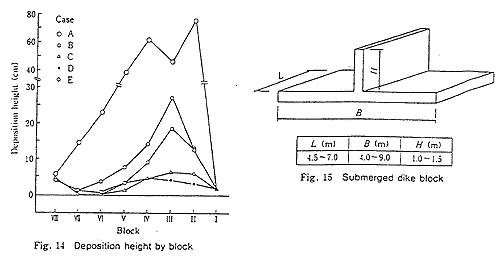
Based on survey results thus far, approx. 2000-m submerged dikes were installed on both sides of a waterway, 4.5 m in water depth and 100 m wide (dike arrangement is as shown in Fig. 3; dike installation was completed on July 1991). Subsequently, the related waterways and anchorages were dredged. The dikes take the inverted T-shape concrete block construction, considering economy and workability as shown in Fig. 15. Joint fillers were provided in clearances between blocks to ensure impermeability.
In order to confirm the waterway siltation preventation effect of submerged dike, measurements have been taken since 1991 as to suspended mud flow using current meters and turbidity meters and the amount of deposition using echo sounders and deposition height measuring plates, with the observation of dike stability continued in parallel. In addition, in 1991, suspended mud flow and the amount of deposition particularly in rough sea, considered dominant over waterway siltation, were measured on the coast side, where dredging had been performed before these measurements and observations.
?@ Difference in SS concentration between inside and outside a submerged dike
When typhoon No. 12 attacked Kumamoto Port in August, 1991, current meters and turbidity meters were placed near -2 m in the vicinity of the south dike so as to measure suspended mud flow inside and outside the dike. Fig. 16 presents time-course changes in SS concentration. The sharp peak appearing outside the dike on August 21 was not noted inside, where the concentration registered only 1/3 or so, which indicates that the submerged dike inhibits suspended mud influx.
?A Suspended mud flow in rough weather