6. Shafting System
In 1999 FY, no remarkable progress from the conventional design method was found in the shafting system due to the long depression in economy, and no novel technology has been announced.
The propulsion system introduced includes the rotating propeller such as the azipod propulsion system equipped with the steering system in place of the combination of the conventional fixed pitch propeller (controllable pitch propeller) with the rudder, and the pump jet of the full-rotation type water jet device1)
The controllable pitch propeller was employed in a shuttle tanker which is equipped with two-engine and two-shaft ship, and the car carrier in compliance with ICE CLASS.
The assembly type pitch adjustable propeller is introduced overseas, in which the propeller blades are bolted to the propeller boss2).
The contra-rotating propeller is introduced for energy saving, but its employment has been canceled due to the influence of the long depression in economy.
From the standpoint of the marine pollution prevention, seal manufacturers including Kobelco Engineering, Japan Marine Technologies Ltd., Eagle Industry, Blohm & Voss, Japan made efforts in the countermeasures for the previously employed stern tube sealing device and in the improvement of the reliability of the equipment. Many pneumatic stern tube sealing device and the fresh water type stern tube sealing device have been employed from the viewpoint of the environmental protection.
The method for installing the stern tube bearing bush with the resin which has been introduced as the labor saving in the works at site has been extensively employed3). Ishikawajima Harima Heavy Industries installed the bushes of two VLCCs (840mm in propeller shaft diameter) by this method, totaling 38 experiences by the end of 1999 since they employed this method on the 38,500 DWT bulk carrier (442mm in propeller shaft diameter) in 1994.
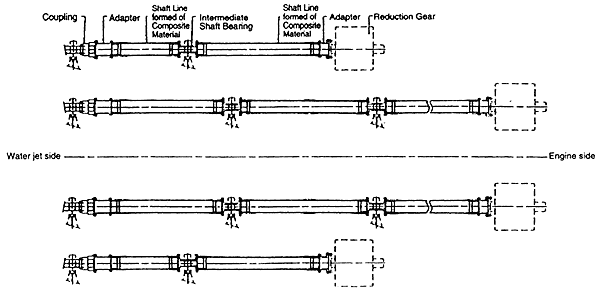
As a novel product, GESLICO products (shaft, coupling) for marine use by Niigata Converter is introduced, which permits the shaft deviation of the engine, and is formed of right and flexible fiber reinforced plastic to meet the requests for the vibration prevention of the main engine for the countermeasures of further vibration and noise prevention as the weight of the ship is reduced and the ship speed is increased. The products are formed of a composite material which is excellent in impact absorption and flexibility, and consists of glass (carbon) fibers and the resin. The products formed of the composite material of the shafting system is approved by major classification societies, and has many service experiences overseas. The products were approved by the JG (Japanese Government) in Japan, and employed in the high-speed patrol boat4). Fig. 6.1 shows an example of installation on board.
The self-propelled dredger of the largest class in the world was built overseas, and delivered in May, 19995). In order to maintain the ship position during the dredging operation, two controllable pitch propellers (having Colt-nozzle), the bow thruster and the rudder are controlled by the computer. The principal particulars of the ship are as follows: