Figure 5 shows a cross-sectional diagram of the combustor. After pre-vaporization and pre-mixing, lean combustion is achieved. To broaden the output range for low NOx operation, supplemental combustion is also used. Three fuel systems are used depending on operation: a pilot burner for light-off and start-up, the main burner for lean combustion of the premixed fuel, and the supplemental burner.
The DLN has been used with natural gas but is still being developed for use with liquid fuels. In our research in addition to using CFD for heat fluid simulation and various other analyses, we are also performing burner section combustion experiments, spray experiments and comprehensive combustor (single can) experiments.
6.3 Technology for improving fuel consumption
To achieve a thermal efficiency of 38~40% will require an approximately ten point increase over conventional gas turbines of the same output class (about 27%). To increase thermal efficiency, research is being carried out on using a recuperator to recover exhaust heat, increasing the TIT temperature, and improving compressor and turbine efficiency.
6.3.1 Recuperator
The recuperator is the key to improving thermal efficiency; it must have a high thermal ratio and be compact enough for marine use.
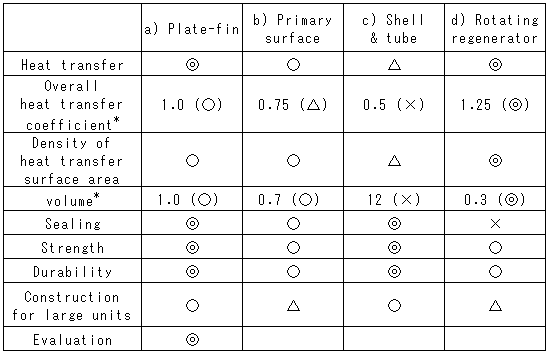
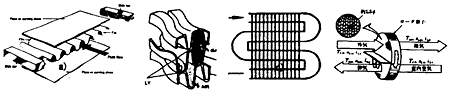
Table 3 shows a comparison of various kinds of recuperators suitable for marine applications. The shell-and-tube type requires a lot of space. The rotary accumulator has a sealing problem which limits its use to low pressure ratios. When comparing the plate-fin type and primary surface type, the latter is slightly more compact, but when strength, durability and ease of large-scale manufacture are considered, the former is superior, so the SMGT uses the plate-fin type.
Figure 6 shows an example of element capacity and thermal efficiency on the plate-fin type. In these results, in order to reach the target thermal ratio of 83%, an element area of approximately 2m3 was required, but final figures will be established only after detailed performance analysis and recuperator performance testing are completed. Additionally, research into construction methods to cope with transient local thermal stress and production feasibility are underway to determine the construction. Figure 7 shows a structural diagram of the present recuperator.
When drift occurs in the exhaust gas flow at the power turbine's exhaust diffuser, which is upstream of the recuperator, the velocity distribution of the exhaust gas inside the recuperator becomes uneven, decreasing the thermal ratio . In order to determine the ideal shape for the recuperator intake and to reduce drift in the exhaust diffuser, flow model experiments and other research are being conducted.