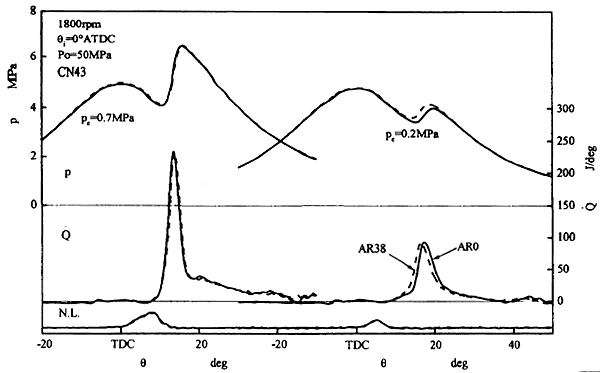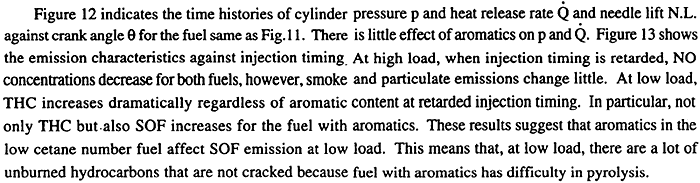
Figure 14 indicates NO-particulate trade-off relationship at high load and injection timing of θi=0°ATDC. In the case of injection pressure Po=50MPa, increasing aromatics with keeping cetane number increases both NO and particulate. While, decreasing cetane number with keeping aromatic content reduces particulate but increases NO emission. In the case of Po=100MPa, every fuel produce low particulate emissions and high NO emission. However, particulate emissions become less sensitive to fuel properties than in the case of lower injection pressure Po=50MPa.
4. Summary
This study investigated the effects of cetane number and aromatic content on combustion and emission characteristics in a direct-injection diesel engine with changed injection pressure and injection timing. It is concluded that:
(1) The low cetane number fuel reduces smoke and particulate but increases NO at high load. On the contrary, at low load, the low cetane number fuel reduces NO. However, THC increases for the low cetane number fuel because overlean mixture is formed due to long ignition delay.
(2) Aromatics in the high cetane number fuel increase both NO and particulate. However, overall combustion characteristics are not affected by aromatics.
(3) For the low cetane number fuel, particulate emissions dose not increase with retarded injection timing at high load regardless of aromatics. However, at low load, the low cetane number fuel with high aromatic content produces not only THC but also SOF emissions remarkably.
(4) High injection pressure produces high NO emission at high load, however, particulate emissions decrease with raising injection timing. Moreover, particulate emissions become less sensitive to cetane number and aromatic content in the case of high injection pressure.