3.2 Effects of aromatic content
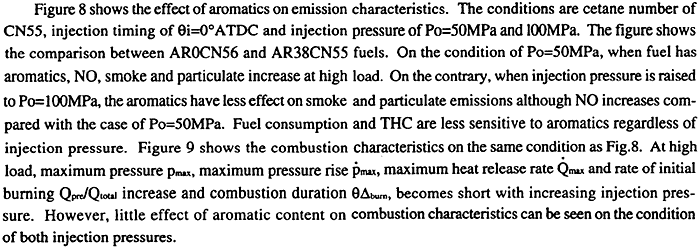
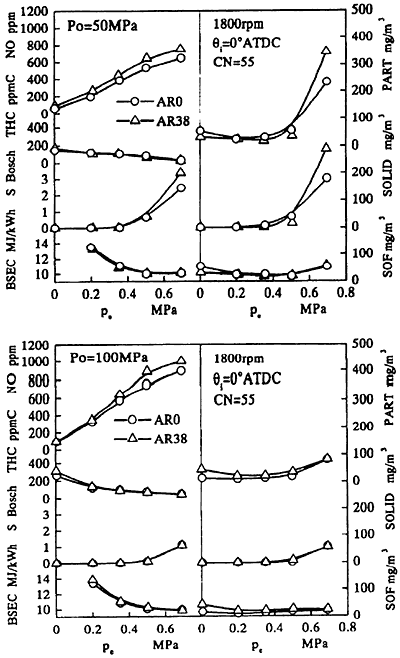
Regarding soot formation, soot is formed physically through late evaporation and late mixing, and chemically through cracking and dehydrogenating of fuel in the locally fuel-rich and high temperature region. Fuels with aromatics tend to produce soot because the hydrocarbons with ring structures are cracked cause the hydrocarbons remain in the locally high ambient temperature. At the condition of high injection pressure, fuel-air mixing is promoted and locally fuel-rich region disappears, resulting in little effect of aromatics on particulate emissions. The increase of NO emission with increasing aromatics may come from the fact that the fuels with aromatics have high adiabatic temperature(8) (9). NO emission seems to be formed in the locally high temperature region because there is little difference in the overall combustion characteristics between the fuels with and without aromatics.