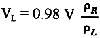
where:
V = volume of the tank
DR = relative density of cargo at the reference temperature (R)
DL = relative density of cargo at the loading temperature
R = reference temperature, i.e. the temperature at which the vapour pressure of the cargo corresponds to the set pressure of the pressure-relief valve.
15.3.24 The maximum allowable tank filling limits for each cargo tank should be indicated for each loading temperature which may be applied, and for the applicable maximum reference temperature, on a list approved by the Administration. A copy of the list should be permanently kept on board by the master.
15.3.25 Zones on open deck. Or semi-enclosed spaces on open deck within three metres of a tank outlet, gas or vapour outlet, cargo pipe flange or cargo valve of a tank certified to carry carbon disulphide, should comply with the electrical equipment requirements specified for carbon disulphide in column "i" chapter 17. Also, within the specified zone, no other heat sources, like steam piping with surface temeratures in excess of 80℃ should be allowed
15.3.26 Means should be provided to ullage and sample the cargo without opening the tank or disturbing the positive suitable inert gas blanket.
15.3.27 The product should be transported only in accordance with a cargo handling plan that has been approved by the Administration. Cargo handling plans should show the entire cargo piping system. A copy of the approved cargo handling plan should be available on board. The International Certificate of Fitness for the Carriage of Dangerous Chemical in Bulk should be endorsed to include reference to the approved cargo handling plan."