Table 1 Particulars of Objective Ships
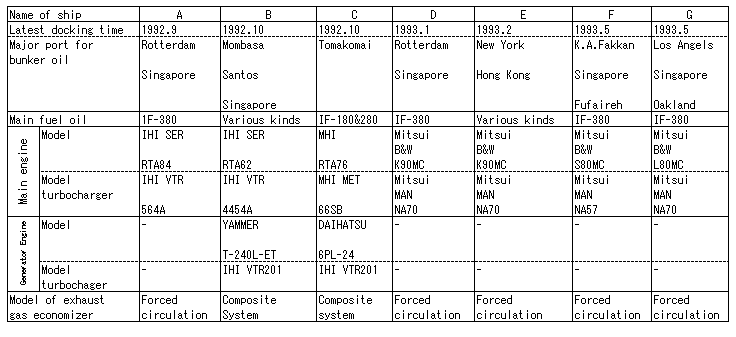
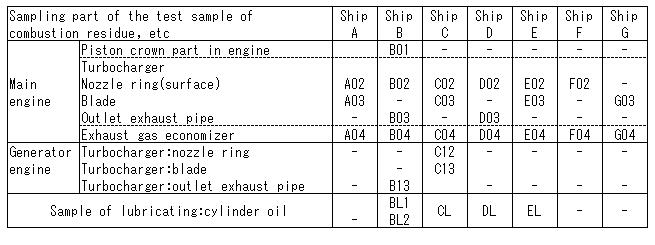
Table 2 Test sample No. of combustion residue
(2) Fuel Oil
1] Density
2] Kinematic Viscosity
3] Flash Point
4] Pour Point
5] Water content
6] Bottom sediment and water
7] Carbon residue
8] Sulfur
9] Asphalten
10] Ash
11] Vanadium
12] Sodium
13] Silicon
14] Aluminum
15] Xylene equivalent
16] CCAI
(3) Main engine cylinder oil and D/G system oil
1] General Properties
2] Metal analysis
3. Results of Analysis
3.1 Results of Analysis (Combustion Residue)
The analysis results of the combustion residue are shown in Table 3.
3.2 Outline of Components of Combustion Residue
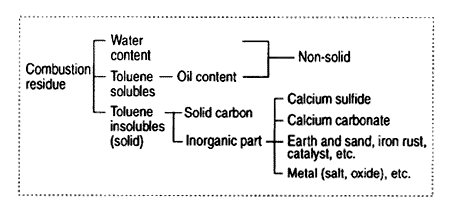
The composition of the combustion residue is roughly classified as follows.
(1) Outline of main composition
The main composition of the deposit of the combustion residue is solid toluene insolubles common to each ship though in different amounts. The major components are calcium carbonate (CaCO3), derived from the alkali additive in the lubricating oil (cylinder oil), and its sulfides (CaS04), and solid carbons such as "soot" formed through incomplete combustion. The components contained in the toluene insolubles are derived from the lubricating oil or the fuel oil.
The content of the toluene solubles (oil part) which is non-solid and water content are small on the whole.
BACK CONTENTS NEXT


